
news
Panama Canal Transit Fees Hit Record Highs as Shipping Crisis Deepens
Severe drought conditions exacerbated by El Niño and geopolitical instability in the Strait of Hormuz have pushed transit premiums to unprecedented levels, with some vessels paying $4 million to bypass delays.
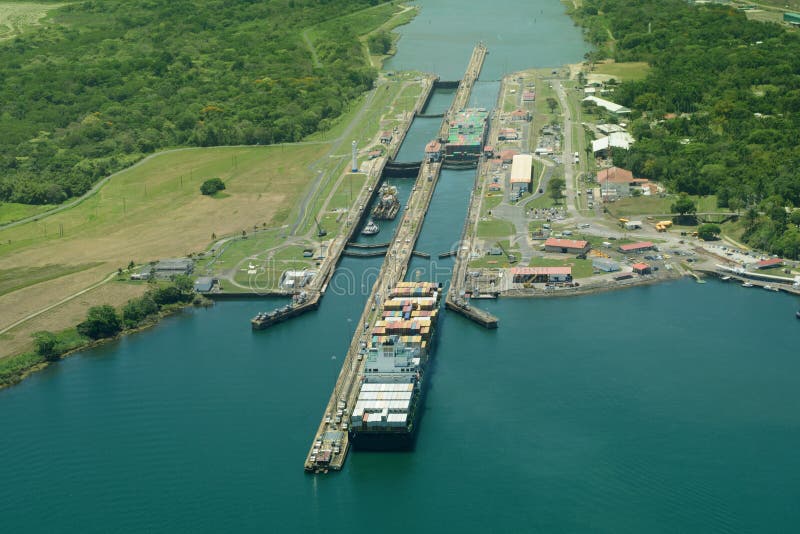
Aerial view of a massive container ship navigating the locks of the Panama Canal.
By John Doe
Reporting from Panama 
Aug. 12, 2026, 8:16 p.m. - 1 month, 2 weeks ago
The Panama Canal, a vital artery for global maritime trade, is currently grappling with a dual crisis that has sent transit fees soaring to record highs. Recent reports confirm that desperate shipping companies are paying up to $4 million in auction premiums to jump the queue, cutting out 10-day wait times that have paralyzed logistics chains.
Operational constraints at the canal are primarily driven by a severe, prolonged drought linked to the El Niño weather phenomenon. Reduced water levels in Gatun Lake, which serves as the reservoir for the canal’s lock system, have forced authorities to restrict daily vessel transits and limit the draft depth of passing ships. These restrictions have created a significant bottleneck, causing hundreds of vessels to queue for transit.
Adding to the pressure on global supply lines is the ongoing geopolitical instability near the Strait of Hormuz. As tensions in the Middle East deter maritime traffic in that region, an increasing volume of vessels is being diverted toward alternative routes, including the Panama Canal, further straining the already limited capacity of the Panamanian waterway.
The resulting surge in demand has triggered an unprecedented auction environment. For major carriers, the economic calculus has shifted; the cost of waiting in line—which includes fuel consumption, crew overhead, and the potential loss of lucrative delivery contracts—now outweighs the astronomical fees required to secure immediate passage.
Industry analysts warn that this situation could persist for several months as water levels remain below seasonal averages. While authorities are managing the backlog through strict scheduling and auction systems, the volatility in transit costs highlights the fragility of global trade routes when faced with the confluence of climate-driven environmental challenges and shifting geopolitical landscapes.
Source: Financial Times
55
Like
0
Comments
19
Disike






Discussion