
world
FAO conducts cross-border survey between Turkmenistan and Uzbekistan
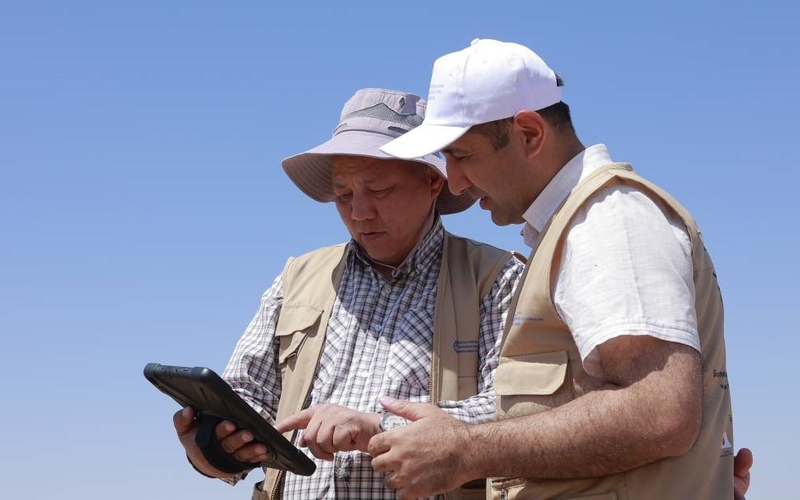
A cross-border survey was organized between Turkmenistan and Uzbekistan from May 31 to June 4 to join efforts towards reducing the threat posed by locusts and strengthening bilateral and regional cooperation, UzA reported.
By John Doe
Reporting from Turkmenistan 
June 23, 2023, midnight - 2 years, 7 months ago
The first part of the survey was conducted along the border areas of Kuytendag, Khojambaz, and Darganata districts of Lebap region of Turkmenistan, involving four experts from each country.
Four Uzbek experts conducted the second part of the survey in Kashkadarya region of Uzbekistan (Nishan and Dehkanabad districts).
The participants included specialists from Turkmenistan's Plant Protection Service, the Ministry of Agriculture and Environment Protection, as well as Uzbekistan's Agency for Quarantine and Plant Protection (AQPP), the Ministry of Agriculture.
43,000 hectares were surveyed on both sides of the border. Moroccan Locusts and Large Saxaul Humpback Grasshoppers were found in most of the explored territories in both countries. Field data was collected using the FAO's Automated System of Data Collection (ASDC). Anti-locust treatments were carried out in parallel against these species by the respective country control teams.
Representatives of the two countries signed a joint protocol on the observed locust situation at the end of the mission. They also agreed to continue close cooperation in minimizing the risk of high locust infestations on both sides of the border.
Experts highlighted the usefulness of such surveys between the two countries, which were conducted as part of the FAO regional Programme to Improve National and Regional Locust Management in the Caucasus and Central Asia.
The Moroccan Locust is considered one of the most serious threats to agriculture in Central Asia, and their movements across borders make their control more difficult. Along with the Moroccan locust, non-swarming locusts such as the large Saxaul Humpback Grasshopper – a typical inhabitant of desert steppes, which feeds on saxaul and other desert plants – also pose a danger.
Similar activity was held between Kyrgyzstan and Uzbekistan in Fergana Valley, covering Batken, Jalal-Abad, and Osh regions of Kyrgyzstan and Andijan, Fergana, and Namangan regions of Uzbekistan.
Experts from Kyrgyzstan's Department of Chemicalization, Plant Protection and Quarantine, Ministry of Agriculture, and from Uzbekistan's Agency for Quarantine and Plant Protection, Ministry of Agriculture jointly surveyed more than 18,000 hectares on both sides of the border. During the survey, country delegates did not observe any locust infestation.
Source: AKIPRESS.COM
69
Like
1
Comments
55
Disike

















Discussion