
Why Concrete Sometimes Gets White Powder on It
Ever wondered why concrete walls and sidewalks suddenly look dusty and weird?
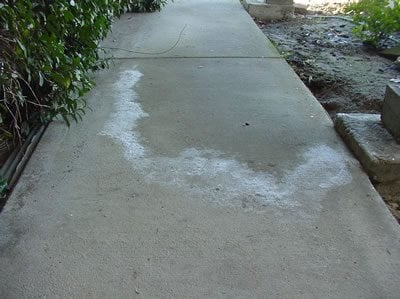
Efflorescence on concrete masonry
By John Doe
Reporting from Govur 
Dec. 30, 2025, 3:06 p.m. - 1 month, 2 weeks ago
Have you ever walked past a concrete wall or pavement and noticed it covered in a mysterious white powder? That’s called efflorescence, and it’s basically concrete’s way of sneezing out salts! Here’s what happens: when water gets into concrete—from rain, puddles, or even the water used to mix it—it dissolves tiny salts hiding inside.
The water travels through the pores in the concrete like it’s on a secret mission and carries the salts to the surface. Once the water evaporates, the salts are left behind, reacting with carbon dioxide in the air to make that chalky white dust you see. Even though it looks spooky, efflorescence doesn’t actually hurt the concrete or make it weak. It’s just annoying and messy.
You’ll see it most often on surfaces that stay damp or where water likes to hang around, like basements, sidewalks, and exterior walls after rain. Some concrete mixtures are more resistant, especially if they include pozzolanic materials like fly ash or slag, which trap calcium hydroxide and reduce the salts available to escape.
People also fight efflorescence by sealing concrete surfaces, improving drainage, or making sure water doesn’t pool nearby. That’s because keeping water out is the key—less water, less powder. It’s kind of like giving concrete a raincoat! So next time you see white dust on concrete, you’ll know it’s not magic, it’s just chemistry, water, and a little bit of patience.
Source: Govur University
125
Like
0
Comments
86
Disike












Discussion